


Contracting Strategies for FOAK Projects by Thibaut de Groen | VoltaChem Annual meeting Break Out highlight
29-06-2026
Thibaut de Groen, a seasoned contracting and procurement expert, delivered a master class on how to organise contracting with EPCs and other vendors while working towards FIDs for First of A Kind projects.
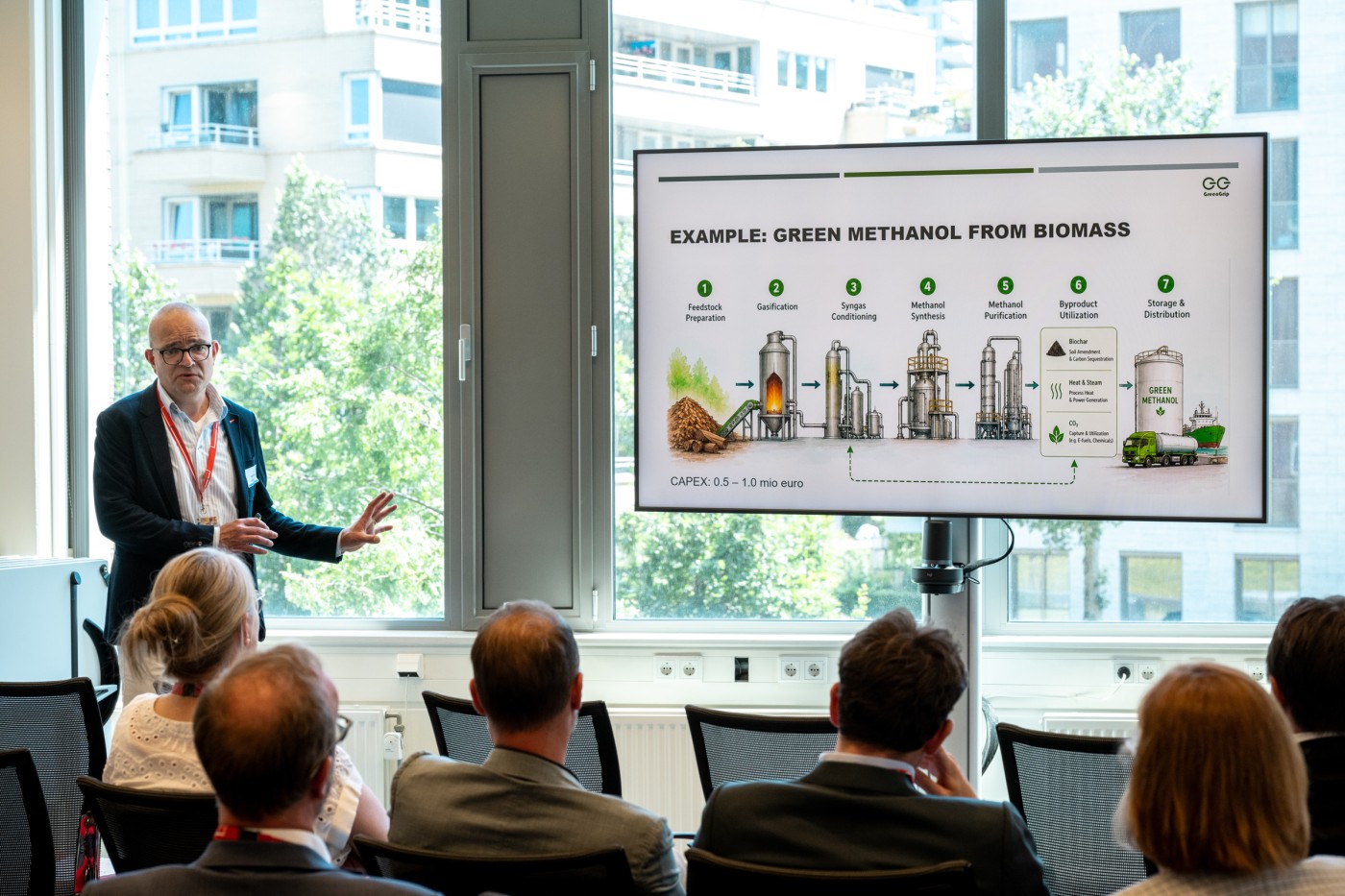 Thibaut's report report examines how First-of-a-Kind (FOAK) projects can enable the transition to de-fossilised chemicals and fuels under the EU Clean Industrial Deal. These projects aim to scale novel technologies (e.g., SAF, methanol, CO₂-based fuels) from demonstration to commercial deployment. However, they face major barriers: high capital costs (€100M–€1B), unproven technology at scale, and limited construction capacity due to competition with the energy transition.
To reach Final Investment Decision (FID), developers must effectively manage risks across performance, cost, schedule, and financing—areas that are tightly interconnected and critical for bankability.
Thibaut's report report examines how First-of-a-Kind (FOAK) projects can enable the transition to de-fossilised chemicals and fuels under the EU Clean Industrial Deal. These projects aim to scale novel technologies (e.g., SAF, methanol, CO₂-based fuels) from demonstration to commercial deployment. However, they face major barriers: high capital costs (€100M–€1B), unproven technology at scale, and limited construction capacity due to competition with the energy transition.
To reach Final Investment Decision (FID), developers must effectively manage risks across performance, cost, schedule, and financing—areas that are tightly interconnected and critical for bankability.
Limitations of Traditional EPC Contracting
The conventional Engineering, Procurement, and Construction (EPC) model—typically preferred in project finance—offers strong guarantees on cost, schedule, and performance. However, in FOAK projects, these guarantees become difficult to secure because contractors are unwilling to assume risks linked to unproven technologies. This leads to reduced contractor appetite, conditional guarantees, or infeasible contracts. As a result, many projects shift toward multi-contracting approaches, increasing interface risks and weakening overall bankability. Poorly developed engineering (FEED) and insufficient early-stage funding further exacerbate these challenges, often leading to project standstill before FID.
Alternative Contracting Approaches
To address these limitations, Thibaut's report evaluates two alternative strategies:
1. EPCM (Engineering, Procurement & Construction Management)
EPCM provides flexibility and lower upfront costs, enabling developers to retain control over design and procurement. It can improve FEED quality but places significant responsibility on the developer to manage interfaces and risks.
However, EPCM suffers from limited predictability in cost, timeline, and performance due to fragmented contracting structures. This makes it harder to secure project financing despite its lower pre-FID cost profile.
2. MPC (Multiple Package Contracts)
MPC divides the project into modular process units with Engineering, Procurement, and Fabrication (EPF) contracts, integrated by a Balance-of-Plant (BoP) contractor. This approach reduces interface risks and improves predictability.
Although MPC requires higher pre-FID investment and greater engineering effort, it provides stronger control over performance, costs, and schedule—key factors for investors.
Key Findings and Recommendations
The report concludes that no alternative fully matches the bankability of EPC contracts. However, MPC outperforms EPCM in delivering predictable project outcomes, which are essential for securing financing. Successful FOAK projects require:
- High-quality FEED and strong developer capabilities
- Transfer of interface risks to capable contractors
- Reduced contractual dependencies to avoid delays
- Full funding across all project phases
Ultimately, developers and financiers must accept that technology performance risk will largely remain with the developer, requiring more sophisticated and realistic contracting strategies to unlock investment.
Share this page:
